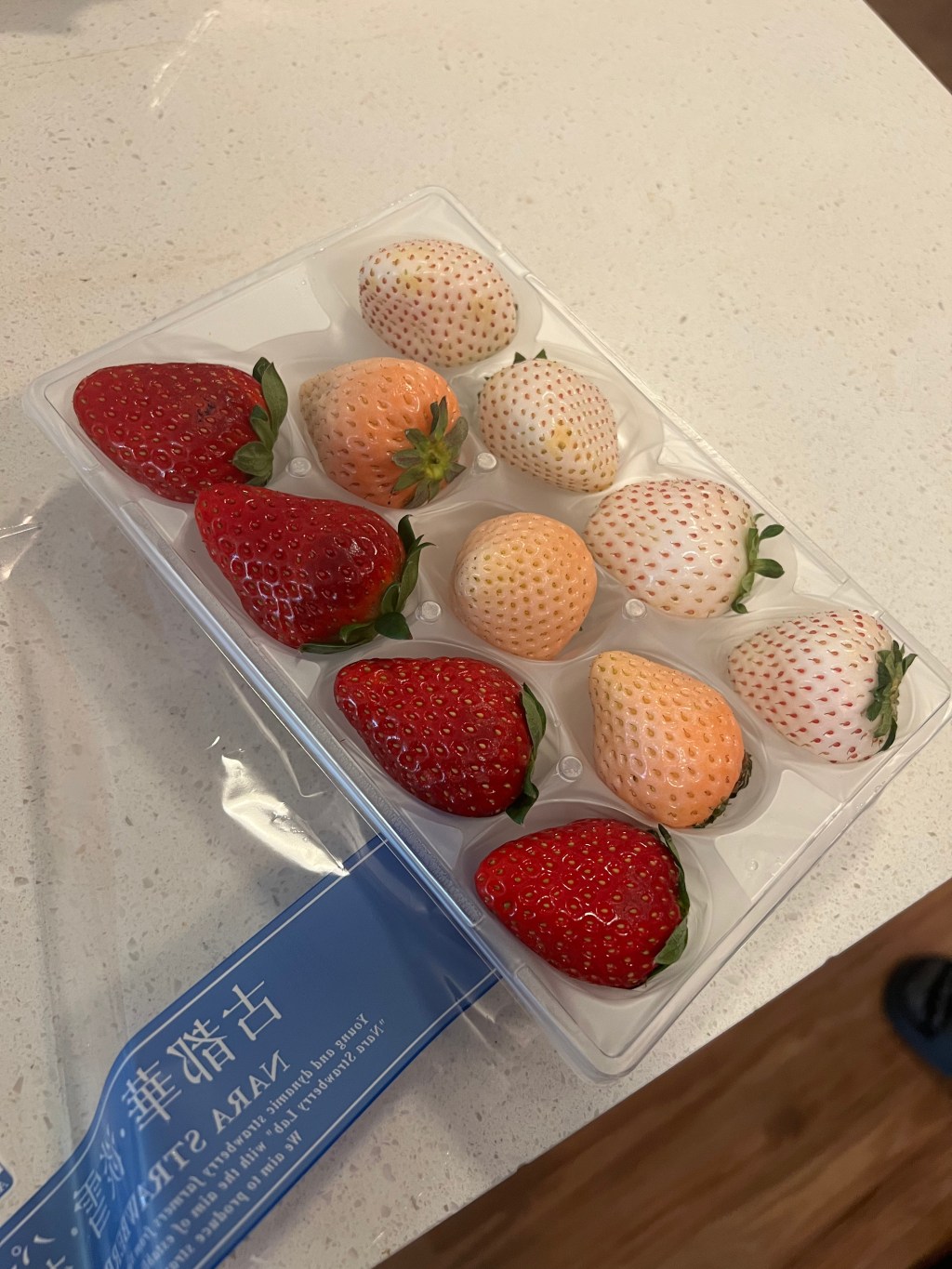
我其实从小就挺喜欢吃草莓的,一口咬下去,甜滋滋的那种。也不知道怎么回事,来到美国之后,就很难再买到真正甜的草莓了。美国超市里的草莓个头都很大,可一口咬下去,几乎没什么味道。只好安慰自己:这种草莓糖分少,好歹还能获得点纤维。
旧金山这片区域,亚洲人口很多。有各类日本超市、中国超市来满足亚洲食品的需求。今天我终于下定决心,买了这包三种颜色的日本草莓。从小,我就对日本的食物抱有一种很高的敬意。不仅因为日本食品安全做得好,更因为在新闻和电视里,日本人做任何事情都有种匠人精神。不管事情大小,他们总能把它讲成一个带有家族历史与传承感的故事。
我爸特别喜欢日本这种“大师文化”,不,更准确地说,是匠人主义。一听餐厅主厨被称作什么之神,他就特别感兴趣。有一次,他专门跑到日本去见“寿司之神”。那时候,这位大师已经退休,不再亲手做寿司了,但我爸还是硬拽着他在门口合影。每逢想起来,他都要给人看看,当然也拉着我们去吃。你听过“鳗鱼之神”吗?我之前也没听说过,鳗鱼烤得确实不错,但要我说我吃得出来这是神仙做的?那可不敢,我可是个唯物论者。
你看,吃个饭都能遇到神仙。那么一到种瓜果蔬菜,日本人就更带劲了。他们不仅喜欢开发各种新品种,还爱给它们起名字:北海道夕张蜜瓜、太阳之子芒果、罗马红宝石葡萄、“美人姬”草莓、青森王林苹果、山形樱桃……听起来就热闹,是不是?
我抱着满心期待的草莓冲回家,好奇到底是什么味道,是否真的很甜?先尝了一口白色草莓,结果并没有想象中的甜,甚至几乎没有味道,连纤维感都体会不出来,真是神奇。红色的那款倒是甜得很,味道不错。
一边嚼着这些草莓,我一边觉得自己好笑:我是不是又上了一堂日本匠人文化的课?也许,种草莓其实并不需要那么多花样。
I’ve actually loved strawberries since I was little—the kind that are sweet the moment you bite into them. Somehow, after coming to the U.S., it’s been hard to find truly sweet strawberries. The ones in American supermarkets are always huge, but when you bite into them, there’s almost no flavor. I can only comfort myself by thinking: at least these strawberries are low in sugar, and I still get some fiber.
The San Francisco area has a large Asian population, so there are all kinds of Japanese and Chinese supermarkets. Today, I finally made up my mind and bought this pack of Japanese strawberries in three colors. Ever since I was little, I’ve had a lot of respect for Japanese food. Not just because it’s very safe, but also because, on TV and in the news, Japanese people seem to approach everything with a kind of artisan spirit. No matter how small the task, they always manage to turn it into a story full of family history and tradition.
My dad is especially into this “master culture”—no, more accurately, artisan culture. If he hears a chef being called some kind of god, he gets instantly fascinated. Once, he even flew to Japan just to meet the “Sushi God.” By then, the chef had already retired and wasn’t making sushi anymore, but my dad still insisted on taking a photo with him at the entrance. Every time he remembers it, he has to show it to someone. Of course, he also dragged us along to eat.
Ever heard of the “Eel God”? I hadn’t either. The eel was cooked nicely, sure—but if you expect me to say I could taste that it was made by a god, well… I can’t. I’m a materialist, after all.
See, you can meet a god just from eating a meal. So when it comes to growing fruits and vegetables, the Japanese really go all out. They not only love creating new varieties but also giving them fancy names: Hokkaido Yubari Melon, Taiyo no Ko mango, Roman Ruby grapes, “Bijin Hime” strawberries, Aomori Orin apples, Yamagata cherries… doesn’t that just sound festive?
So there I was, clutching this pack of strawberries with high expectations, rushing home. I was curious—how would they taste? Would they be really sweet? I tried the white strawberries first. Not as sweet as I imagined. In fact, almost no flavor at all. I couldn’t even notice the fiber! Truly amazing. The red ones, however, were sweet and delicious.
Chewing these strawberries, I couldn’t help laughing at myself: had I just taken another lesson in Japanese artisan culture? Maybe growing strawberries doesn’t really need all that fuss.


Leave a Reply